Psychological Sciences (Conversion) MSc Online
Gain an understanding of the practical applications of psychological sciences and gain career-enhancing skills.
 Start Dates: January, May, September
 Duration: 1 year full-time, 2 years part-time
 Study Mode: Online
 Fees: £11,135
About the programme
Unlock the complexities of the human mind with our online MSc in Psychological Sciences (Conversion). As a leading technical university with a strong social mission, we’ve crafted this programme to equip you with the skills to understand human behaviour and address critical societal challenges.
Accredited by the British Psychological Society (BPS), this programme blends cutting-edge research with practical applications, preparing you for a successful psychology career or enhancing your current professional role.
Our flexible online format allows you to balance your studies with personal and professional commitments. Join a diverse global community, connect with peers and industry professionals, and expand your network while gaining valuable insights into the field of psychology.
Accreditation
This programme is accredited by the British Psychological Society (BPS). As a graduate of this programme, you’ll be eligible for Graduate Basis for Chartered Membership (GBC) from the BPS, putting you on the right path forward in your psychology career.

How you’ll study
Online learning environment
The MSc Psychological Sciences is delivered through Brunel’s virtual learning environment, giving you access to course materials, recorded lectures, and interactive resources at any time. You will engage with content through video lectures, discussion forums, and collaborative activities with your global cohort. All learning is asynchronous by default, allowing you to study when it suits you, with scheduled touchpoints for tutor interaction and peer discussion.
Weekly study commitment
Full-time students should expect to dedicate approximately 35-40 hours per week to their studies. Part-time students typically commit around 15-20 hours. Your time is split between directed learning activities, independent study and reading, and assessment preparation. The programme runs across three intakes per year – January, May, and September – with a structured module timetable.
Assessment methods
Assessment is through a balance of coursework and examinations. Depending on the module, you may complete written reports, statistical analyses, research design projects, qualitative research exercises, and in-class tests. The programme covers all core areas of psychology – cognitive, social, developmental, and biological – with a strong emphasis on research methods and statistics. The programme culminates in an Empirical Psychology Project, where you conduct original research.
Support and feedback
You will have access to dedicated academic tutors and a student support team throughout your programme. Tutors provide structured feedback on assessments, and you can reach out to your support team for guidance on academic, technical, or administrative matters. Brunel’s online students also have access to the university’s library, careers service, and wellbeing resources.
Entry requirements

Academic qualifications
A 2:2 UK Honours degree (or higher) or an equivalent international degree.
- Applicants without a bachelor’s degree can still apply if they have at least 5 years of relevant work experience plus university studies equivalent to UK NQF Level 4 or higher. (Applications are reviewed on a case-by-case basis).

English language requirements
You must meet one of the following minimum test scores:
- IELTS: 6.5 overall (minimum 6.0 in all subscores)
- Pearson (PTE): 59 overall (minimum 59 in all subscores)
- TOEFL: 90 overall (minimum 20 in all subscores)
- BrunELT: 63% overall (minimum 58% in all subscores)
- Senior Secondary School certificate WAEC/WASSC, KCSE, MCSE, Indian Grade 12 Standard, or SPM Grade would be considered.
Modules
Our refined modules ensure an optimal learning experience, equipping you with practical skills for career success through eight core modules and a final research project.
Fees and funding
Tuition fees for the MSc Psychological Sciences (Conversion) are £11,135 for the full programme. This covers all teaching, learning materials, assessments, and access to Brunel’s online resources – there are no hidden costs.
Payment options
Brunel offers a six-month payment plan, allowing you to spread the cost by paying your first instalment at registration and the remaining balance across five equal monthly payments.
Discounts and scholarships
You may be eligible for one or more of the following:
- Early Payment Discount (2%) — applied automatically when you pay in full before your registration date
- Alumni Discount (15%) — for Brunel graduates returning for postgraduate study
- Family Discount (10%) — when a direct family member is also studying at Brunel
- Academic Excellence Award (15%) — for applicants holding a first-class undergraduate degree
Discounts can be combined where eligible. Visit the full fees and funding section for detailed eligibility criteria.
Student loans
UK residents may be eligible for a Postgraduate Master’s Loan through Student Finance England. The loan is not means-tested and is paid directly to you to use towards tuition fees and living costs. Visit gov.uk/masters-loan for full details and to check your eligibility.
Career outcomes
Opening the door to psychology
The conversion MSc is designed for one primary purpose: to give non-psychology graduates the qualifications they need to enter the psychology profession. With BPS Graduate Basis for Chartered Membership, you can progress to specialist postgraduate training in clinical, forensic, educational, occupational, or health psychology, pathways that are not available without GBC.
Roles our graduates pursue
- HR specialist – applying psychological principles to recruitment, employee wellbeing, and organisational development
- Marketing analyst – using consumer psychology and behavioural insights to inform strategy
- Forensic psychologist – working within the criminal justice system (with further training)
- Clinical researcher – contributing to psychological and health research in academic or clinical settings
Where our graduates work
Brunel Psychological Sciences graduates work across the NHS, Nuffield Health, Public Health England, and a wide range of organisations in education, criminal justice, and corporate HR. Many graduates use the GBC qualification to progress to doctoral-level training in clinical, forensic, or educational psychology.
The BPS advantage
BPS Graduate Basis for Chartered Membership is the gateway credential for the psychology profession in the UK. Without it, you cannot access most specialist postgraduate training programmes or register as a practitioner psychologist. This programme gives you that credential in one to two years, entirely online.
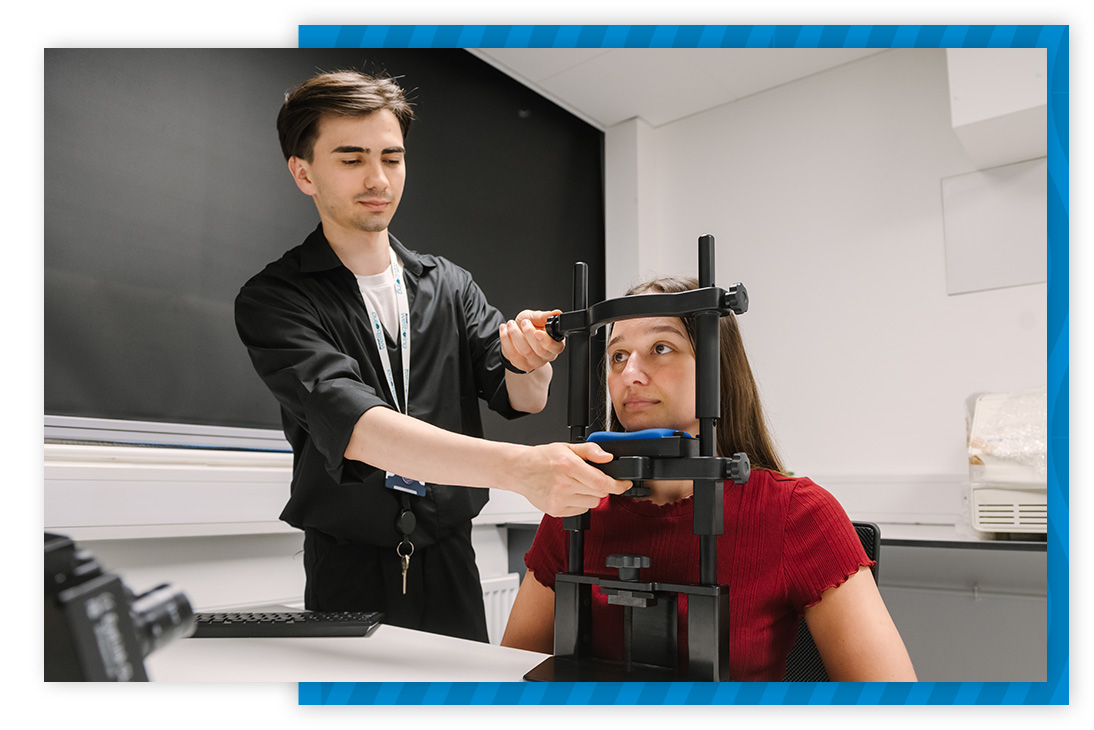

As the Programme Director for the MSc Psychological Sciences online conversion course, I find great fulfillment in facilitating the academic journey of students from diverse backgrounds worldwide. Our curriculum comprehensively covers core areas of psychology, providing students with a robust framework for both further academic study and professional advancement. We welcome students from all corners of the globe to join our programme.
Why choose this programme
BPS-accredited conversion route
This is one of the few online conversion programmes accredited by the British Psychological Society (BPS). Successful completion gives you Graduate Basis for Chartered Membership (GBC), the essential first step towards becoming a chartered psychologist. No psychology background is required.
Comprehensive psychology curriculum
Ten modules cover every core area required by the BPS: cognitive psychology, social psychology, developmental psychology, biological psychology, individual differences, research methods, and qualitative methods. You gain the same foundational knowledge as an undergraduate psychology graduate, at postgraduate level.
Research skills
The programme places strong emphasis on both quantitative and qualitative research methods. You will develop competence in statistical analysis, research design, and data interpretation, skills valued not only in psychology but in any research-oriented profession.
A London university with global standing
Brunel University of London is ranked in the top 25% of UK universities. A BPS-accredited psychology conversion from Brunel carries weight with employers and postgraduate programme admissions.
Built for working professionals
Three start dates per year (January, May, September), fully online delivery, and flexible study options mean you can transition into psychology without stepping away from your current career.
Career-driven outcomes
Your MSc is designed with industry skills and knowledge in mind, providing you with the skills you need to secure your chosen career path. Each module is carefully constructed to elevate your knowledge in key areas of psychological sciences relevant to industry standards.
In-demand skills to lead in psychology

Statistical analysis
Master psychological research design, analysis, and statistical methodologies.

Data interpretation
Master interpreting psychological data and making evidence-based conclusions.

Communication skills
Enhance communication of complex psychological concepts to diverse audiences.

Psychological theory
Master core theories in cognitive, social, developmental, and biological psychology.

Critical thinking
Sharpen your skills in evaluating research, theories, and real-world applications.

Ethical considerations
Understand ethical issues in psychology to uphold professional standards.
Shape the future of psychology
Change-making focus: Gain the skills to transform psychology, making a lasting impact on individuals, communities, and society.
Industry-relevant curriculum: Tackle pressing mental health and behavioural challenges through cutting-edge case studies and research, guided by leading psychologists.
Interactive global classroom: Collaborate with peers worldwide in a dynamic virtual learning environment, preparing for leadership in the global psychological sciences field.
Take the next step
Fill out the form and one of our advisors will be in touch with more information, including our brochure.

Hear what our students have to say about this programme
Supporting you towards success
Throughout your academic journey, we offer personalised guidance, skill workshops, alumni network access, and continuous support.
Many of our graduates take on key roles in psychology, such as:
- HR specialist
- Marketing analyst
- Forensic psychologist
- Clinical researcher